Can you guarantee that your company will withstand the next inevitable disaster? In today’s continually evolving and interconnected global economy, business leaders can no longer rely on the idea that there is something that will happen when it comes to substantial disruption; they now need to know the precise date and magnitude of those disruptions.
As catastrophic weather, sophisticated cybersecurity attacks on businesses, and supply chain failures have become commonplace across the globe, the ability to remain operational is vital for any company to succeed. The traditional method of planning and supporting business continuity for companies is slow, fragmented, and out-of-date, and provides businesses with a blueprint for responding to and recovering from a catastrophic event.
It has made businesses vulnerable to significant disruptions and the risk of significant harm to their reputation. To achieve operational excellence and be successful, companies should implement dedicated enterprise risk management software. Risk management software allows companies not only to create a business continuity plan but also to build future-proof business continuity plans on a comprehensive, immediate, and integrated basis with their existing governance, risk, and compliance systems.
The Foundation of Resilience: Integrating Risk into Business Continuity
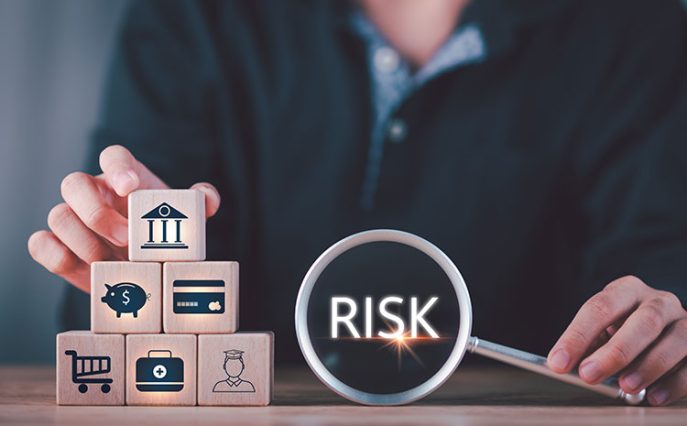
A comprehensive understanding of the risk management process within your business will help you create an effective Business Continuity Plan (BCP) and implement and maintain it. You cannot recover from a Business Disruption if you don't identify, assess, or prioritize the risks associated with that event. Therefore, risk management tools are essential to your organization's efforts to establish a successful risk management program.
Risk management software is not a collection of stand-alone spreadsheets. It enables organizations to see risk corporately and in context. By automating the complex risk management activities that constitute and enable a dynamic BCP, modern risk management software enables organizations to easily create and maintain BCPs. Additionally, modern risk management software collects and aggregates data from multiple sources, ensuring that your BCP is based on up-to-date, accurate risk data; therefore, this integration is critical to achieving operational resilience.
The Critical Role of Automated Risk Assessments
The initial risk analysis and subsequent risk assessments are often among the most time-consuming and inconsistent components of a BCP. Risk Management Software automates the entire risk assessment lifecycle in a structured manner, ensuring that everyone's processes are aligned across all organizations. The software provides configurable templates and scoring methodologies to ensure that every team within an organization conducts risk assessments in accordance with ISO standards or similar criteria.
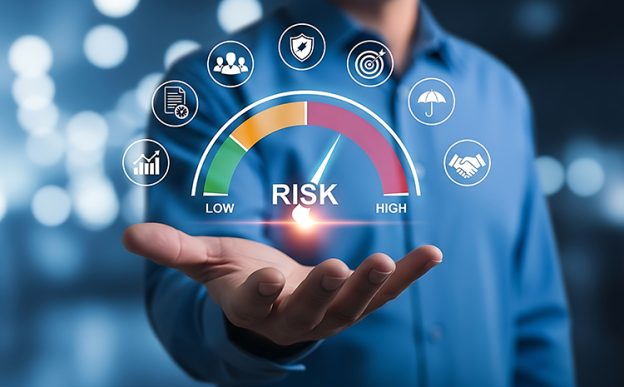
Once the initial risk assessments have been completed using this automation process, the results are collated into a comprehensive risk register that includes all types of risk, from operational to strategic decisions, to IT to ESG. In addition, the risk management software takes raw data from all teams and translates it into visual heatmaps and dashboards that provide a snapshot of each team's risk assessment results. This centralized collection and computation of risk assessments in real time significantly accelerates the planning phase of BCP and risk management in general.
Streamlining the BCP Workflow with Risk Management Software
In the application of risk management software to BCP, the concept of operational excellence can be seen. The software simplifies the complex workflows associated with plan creation, maintenance, and testing.
- Automating business impact analysis and recovery planning
The Business Impact Analysis (BIA) is one of the key steps in BCP that determines the key business processes, the dependencies, and the maximum duration of the disruptions. The BIA process is automated by the risk management software, which includes a program to disseminate surveys and collect data, as well as dependency mapping. The system can connect processes to underlying assets, vendors (third-party risk management), and personnel to provide immediate insight into how a failure in one part of the organization can impact the entire organization. This is not an old-fashioned report; the best risk management software will streamline the BCP by connecting the identified high-impact risks in the risk register directly to specific risk mitigation plans and recovery actions. This will make all parts of the plan risk justified.
- Centralized documentation and change management
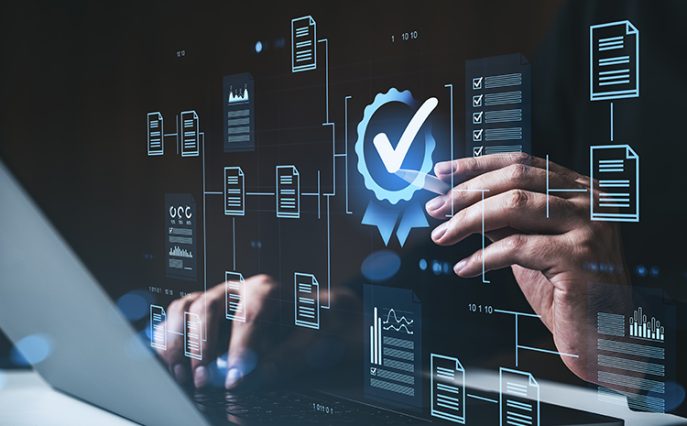
One of the primary issues with legacy BCP is control over versions and scattering documents. The risk management software is a central risk management environment that has become a single source of truth for all continuity plans, contact lists, and recovery procedures. Notifications are automatically sent to the owners of the corresponding plan when there are any changes to the underlying asset, contact, or risk profile. This will ensure that BCP documentation is on time and aligned with emerging regulatory requirements, including those under the ISO 22301 standard. Internal audit and governance, risk and compliance (GRC) teams also have full access to the audit trail and dashboards in the system.
Enhancing Response and Recovery through Real-Time Visibility
The ability to implement your business continuity plan as quickly as possible when a crisis begins is a key function of risk management software. In addition to executing the plan, risk management software provides real-time capabilities to activate crisis communications plans, such as sending notification alerts to response teams and stakeholders.
- Dynamic dashboards for informed decision-making
The dashboards within the software provide decision makers with the concise information they need during an incident to make timely, effective decisions. Risk management software provides decision-makers with dynamic dashboards that visually display the status of disruptions, enabling decision-makers to monitor the recovery process against their organization's predetermined recovery time objectives (RTOs) through visual representations of risk data. By providing decision-makers and corporate leadership with the most up-to-date information on event status, risk management software enables organizations to be better positioned to make key decisions about resource allocation and to mitigate the effects of crises.
- Tracking remediation and compliance
After a risk incident is contained, the risk management software will focus on remediating the incident and learning from it. The risk management software tracks and manages all post-incident action items, including gathering evidence for audit management/compliance management, and adding lessons learned to the risk register. This closes the loop on the risk management cycle and provides the basis for continual improvement of future risk assessments and business continuity Plan iterations. By integrating this learning from the incident, the overall risk management program becomes an ongoing, cyclical process that enhances your operational resilience.
Strategic Advantages of an Integrated GRC Approach
The implementation of the BCP risk management software is a major strategic move that goes far beyond disaster preparedness. It changes the organizational stance radically to active ERM.
- Unified GRC and compliance management
Risk management software providers also offer a variety of modules that enable customers to build a comprehensive GRC suite comprising compliance management, policy management, and internal audit tools. This integrated method, known as enterprise risk management (ERM), provides a single platform for monitoring compliance with a variety of frameworks, including sector-specific regulations and international standards such as ISO certifications. The mapping controls are applicable to several regulatory compliance needs, and the ability to map them once and use them across numerous regulatory compliance requirements can greatly help reduce cybersecurity risks and manage third-party vendors.
- Leveraging advanced integrations and scalability
Risk management applications today are built to grow with you and connect easily with any of your other business areas, enterprise risk management systems, like Human Resources, IT services, and IT service management (ITSM), and supply chain, allowing for smooth integration of risk data, so you can see exactly where you are most vulnerable in real time. As AI-Powered Risk Management Applications begin to incorporate analytics capabilities, predictive analytics is being introduced, changing risk management from just reacting to a threat to anticipating possible risks and providing proactive solutions to fixing issues before they occur. The predictive features of these applications enable companies to ensure they invest resources in the effective protection of their business rather than merely reactively responding to threats and risks.
Conclusion
Risk management solutions are no longer just an optional expenditure for any company seeking true operational excellence. Risk management software is now the most valuable tool for automating complex business continuity planning (BCP) processes, integrating risk assessments into day-to-day operations, and ensuring your organization is always prepared.
With integrated dashboards and a complete view of governance, risk and compliance (GRC), organizations can make well-informed, timely decisions to prevent or mitigate potential disruptions and facilitate recovery from a disaster as quickly as possible. When transitioning to a dedicated risk management solutions platform, organizations take one of their most important steps toward becoming resilient, compliant, and continually optimizing.
FAQs About Risk Management Software
1. What are the 5 pillars of operational resilience?
Risk identification and Management, Business Continuity Planning, IT Resilience, Crisis Management and Response, and Adaptive Governance and Culture are the five pillars of operational resilience. These pillars represent the basic building blocks of an effective resilience program.
2. What is the relationship between risk management and business continuity planning?
By utilizing business continuity exercises, you can effectively identify and mitigate your lower-level risks. Risk management focuses on identifying and mitigating risk, while Business Continuity focuses on developing plans to address the worst-case scenario.
3. What is a business continuity plan in risk management?
Business continuity planning comprises a series of actions and processes and is usually documented in a formalized document. Having a documented business continuity Plan helps maintain business continuity during an operational disruption. As such, it is important to put in place a document that identifies the potential impact of interruptions to a company's continuity of operations prior to the actual event.
4. What are the 4 Ps of operational risk?
The four Ps, or prediction, prevention, preparation, and protection, provide a fundamental roadmap for managing and accessing risk. In many industries where dangerous and complicated situations exist, proactive and extensive risk evaluation is essential.
5. What are the 4 types of business risk?
Business organizations face four main categories of risk: strategic, regulatory, operational, and reputational. Factors causing these risks can come from both outside and inside a company.