Think back to the last time a market shift caught your organization off guard. Perhaps it was a sudden supply chain disruption or an overnight change in regulatory requirements that left your compliance team scrambling.
For most business leaders, the traditional method of looking in the rearview mirror to predict the road ahead is no longer sufficient. We have entered an era where volatility is the only constant, and the static, manual risk assessments of the past are becoming liabilities rather than assets.
In 2026, the question is no longer whether you can identify a threat, but how fast you can stress-test your entire ecosystem against it. This is where AI-powered risk assessment transitions from a futuristic luxury to a non-negotiable cornerstone of modern enterprise strategy.
The Shift from Static to Dynamic Risk Management
Risk management was previously conducted at regular intervals (quarterly and annually), but in today’s fast-paced global economy, this is no longer sufficient. Businesses have begun using AI-powered risk assessment to adopt a continuous risk monitoring and mitigation model.
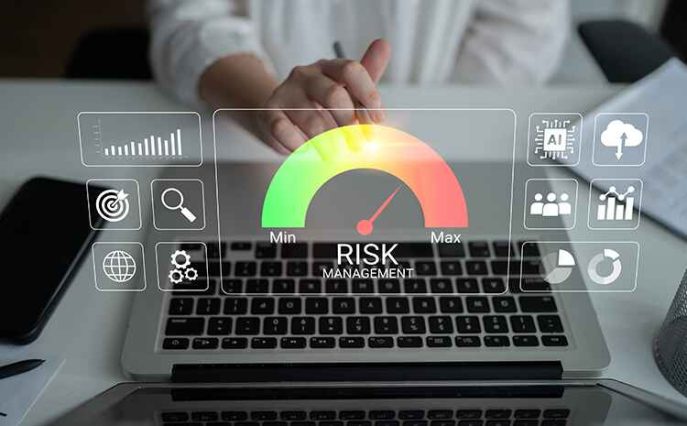
AI-powered risk assessment software is used to apply machine learning and advanced algorithms directly to the operations of the business so that stakeholders can have an up-to-date risk heat map that allows them to make real-time decisions based on live events instead of using past historic data that is no longer relevant due to an unpredictable geopolitical situation or a flash drop in commodity prices.
Previously, by the time an organization, such as a healthcare CEO or fintech leader, received a traditional/risk report, it would have already been too late to mitigate effectively. Today, because of how AI has changed the manual, time-consuming nature of risk identification, the timeline has changed drastically. The automation of risk workflow processes with AI allows for processing large datasets that would take a human team months to complete
Architecting the AI-Powered Risk Infrastructure
Creating a resilient risk-based architecture requires much more than simply deploying an AI-powered risk assessment application. It requires rethinking how information moves through an organization. Modern AI systems rely on machine learning algorithms that work with both structured and unstructured data.
They consider a range of information (including social media sentiment, news feeds, and financial metrics) from various sources and create a comprehensive picture of potential risk. When a company adopts AI-powered risk assessment applications, it develops a digital twin of its risk landscape, enabling its security staff to run thousands of "what-if" scenarios per hour.
Many technical aspects of these systems depend upon training data that matches the complexity of the real-world marketplace. While older legacy-style applications used rigid rules to make decisions, new AI applications use generative and LLMs to derive meaning from context.
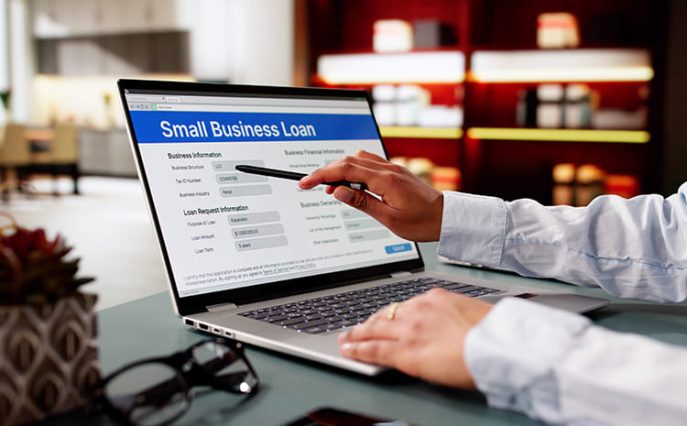
For example, AI in lending has transitioned from merely using a ‘credit score‘ to understanding how a borrower behaves, so there is no longer any delay in making a lending decision due to the time required for human judgment. This level of automation does not diminish human judgment. It provides additional support and enhances it by filtering out noisy information.
Navigating Regulatory Requirements and Industry Standards
The rise in the adoption of artificial intelligence has led to increased global regulatory scrutiny. Achieving regulatory compliance in 2026 will require organizations to continuously prove that their AI systems are safe and reliable, rather than simply checking off compliance requirements.
Organizations have begun to align their internal policies, procedures, and processes with the NIST AI Risk Management Framework and ISO industry standards for managing AI outputs, ensuring that AI-driven decisions are made transparently and accountably. Organizations using AI-powered risk assessment must build their capacity to explain how their models generate outputs to prevent losses resulting from non-compliance.
High standards are necessary to maintain the integrity of training data and thereby minimize false positives in AI-powered risk assessment. The training data used to train an AI system must be unbiased and complete. Otherwise, risk identification will be flawed, leaving the business ill-prepared for a high-risk situation. To prevent this, leading organizations are conducting rigorous testing of their algorithms to ensure they are free of vulnerabilities and human error in the initial coding phase.
Strengthening Cybersecurity and Operational Resilience
In 2026, when digital-first time and place are the norm, cybersecurity and operational risk have become indistinguishable. Vulnerabilities introduced by software updates can cause massive supply chain disruptions in minutes. AI-powered risk assessment represents the first line of defence against both emerging and evolving cyber threats that change too quickly for operational security and risk management teams to keep track of.
With continuous monitoring capabilities, AI can identify anomalies in a system, signalling potential breaches or outages before they escalate to a crisis. A proactive mitigation effort can distinguish between a minor technical issue and a catastrophic failure. Furthermore, integrating AI tools into the supply chain provides a much more granular view of third-party risk. A majority of business failures are not caused by internal mistakes; they are caused by failures of the overall ecosystem in which businesses operate.
AI-powered risk assessment will evaluate the operational stability and financial health of all vendors. If a critical supplier shows signs of distress, AI will automatically trigger a risk-mitigation plan to identify alternative suppliers. This level of automation will provide the agility businesses need to continue operating within an ecosystem that allows them to absorb shocks without losing momentum.
The Role of Human Oversight in the Age of Algorithms
AI systems can do a lot, but ultimately, people will always need to be in charge of their decision-making. The best use of AI-powered risk assessment is when technology is viewed as a tool that enhances human decision-making. Algorithms can analyze large volumes of data and generate risk scores in real time and at scale, but very often the decision based on those risk scores requires human judgment.
This provides stakeholders (both internal and external) with a means to ensure that the AI's results are consistent with the organization’s overall strategy and ethical standards. Explainability serves as the connector between machine reasoning and human behaviour.
For example, if an AI-powered risk assessment alerts a user that a transaction is high-risk, the explanation provided by the AI must allow the user to validate the finding and determine an appropriate course of action. By combining deep learning with human oversight, organizations can reduce the likelihood of errors in an artificial intelligence system and ensure their risk management efforts remain connected to the ‘real’ world.
Futureproofing for 2026 and Beyond
As 2026 progresses, companies will need to respond to an ever-growing risk landscape, requiring them to commit to long-term technological evolution. When you invest in AI-powered risk assessment, your investment should be viewed as part of an ongoing process to build resilient companies as a whole.
When streamlining processes and reducing the time spent on manual audits, you can redeploy your human resources to focus more on higher-order strategic thinking. Successful brands will define themselves by their ability to prioritise risks in real time and make well-informed decisions under pressure. Companies today cannot eliminate risk entirely. Rather, they must manage it effectively, most likely through the advanced technologies available today, to gain a competitive advantage.
Conclusion
The transition to AI-powered risk assessment is changing how companies manage risks and ultimately grow. Instead of relying on past events to guide their risk decisions, organizations can leverage AI to provide real-time, data-driven insights, moving away from a reactive approach and using risk management as a strategic growth tool.
Companies can better address the complex landscape of regulations and supply chains facing them today and beyond as they embrace AI-powered risk assessment. By doing so, these organizations will gain a distinct competitive advantage over competitors who do not fully utilize this technology for risk management initiatives.
As you continue to refine your strategic plan for FY 2026, recognize that the organizations that survive will be those that have developed the most advanced AI capabilities for managing uncertainty.
FAQs About AI-Powered Risk Assessment
1. Can AI be used for risk assessment?
AI algorithms can analyze large amounts of data, identify patterns and trends that would otherwise be difficult for a human to see, and help assess risk more accurately. Furthermore, AI can automate routine tasks by improving efficiency and reducing human error, including monitoring and compliance checks, as well as detecting fraud.
2. What is the AI model risk assessment?
An AI model risk assessment is a formalized structure for future reference or for inclusion in your own "Playbook". It serves as a comprehensive guide that allows you to create a record of all the AI systems you have, evaluate the risks associated with each system by identifying the potential impact and likelihood of a security incident, and develop plans to mitigate those risks before they become a reality.
3. What are the 4 C's risk assessments?
One of the significant pieces of information that will enhance the effectiveness of online safety in your school is to determine the possible risks. KCSIE classifies online safety risks in four categories: content, contact, conduct, and commerce (also known as contract). These can be referred to as the 4 Cs of online safety.
4. What are the 4 types of risk assessment?
Risk assessments are usually of four types: qualitative, quantitative, subjective, and objective, which organisations frequently use. This paper will take a closer look at each of these AI-powered risk assessment methods and elaborate on their significance, procedures, advantages, and limitations.
5. Can AI write a risk assessment?
AI applications improve audit accuracy and save time by automating AI-powered risk assessment. However, AI can also automate data analysis, identify risks from large databases, and provide auditors with recommendations for remediation by providing access to information on how to resolve them.