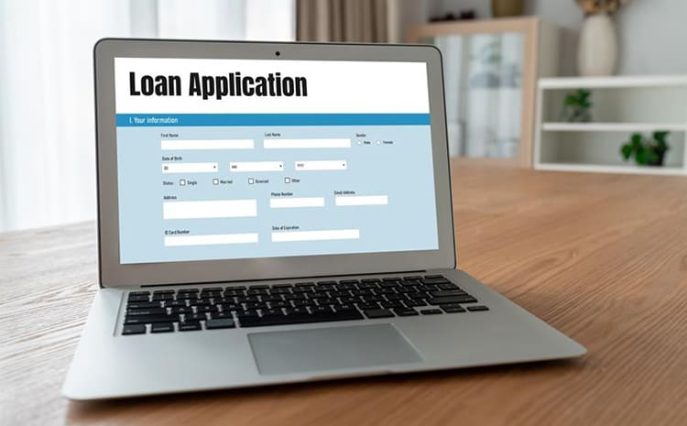
Ever thought about how providers navigate the complex world of small business financing while also safeguarding their investments? Well, the small business sector is attributed as the vital engine of economic growth, however, there is a high level of risk data when it comes to providing capital to such enterprises. Such potential risks can be only mitigated if we resort to modern technology such as risk management applications .
Unlike large-scale businesses with established financial histories, a lot of small businesses, especially startups, and those in the niche markets, can pose some serious challenges for the lenders. Due to such inherent risk identification, it becomes crucial for lenders to follow effective risk management pricing and cybersecurity protocols throughout each and every dashboard of the lending process - from the moment the loan application is received until the ongoing functionality and collection of payments.
As we’re living in a very fast-paced digital world, the complexity of loan applications demands more than manual procedures and this is where technology like the enterprise risk management software for banks emerges. It is basically a tool that is specifically designed in order to accelerate and simplify the complex and strategic decision-making procedures involved in loan lending.
Types of Risks in Business Lending
Credit Risk
The most fundamental risk - credit risk refers to a potential loss a lender faces in case a borrower fails to meet their repayment obligations. Hence, an effective assessment of the entire financial health of the borrower, industry stability, and management capabilities is crucial in order to mitigate this risk. Therefore, strong risk management processes can potentially enhance credit risk assessment by providing automated underwriting rules and comprehensive data analysis.
Fraud Risk
Fraud risk occurs when there’s a potential for financial loss due to intentional deception, misinterpretation, as well as any kind of illicit activity by the loan applicants or the third parties. Hence, modern compliance risk software often involves integrated tools for cross-referencing data points and document validation that are essential for the detection of fraudulent applications on risk management software for banks.
Compliance and Regulatory Risk
Compliance and regulatory risk is another type of risk that arises when a lender fails to adhere to the laws and regulations formulated by the stakeholders, and even to the industry standards, leading to vulnerabilities, legal actions, fines, and even reputational damage. With the help of an advanced risk management solution for banks, features like built-in compliance checks, and automated reporting can be formulated in order to help the lenders to stay updated with the changing regulatory templates.
Operational and System Risk
Well, operational risk occurs when there’s a failed internal process, human error, system failure, or due to any kind of external event. Well, there can be any kind of mistakes that may happen such as data entry mistakes, and IT system outages that ultimately slow down the lending process. Therefore, the implementation of comprehensive compliance risk software would help in reducing these risks by automating tasks and minimizing manual touchpoints, thereby improving efficiency and accuracy, and ensuring a capable risk management software for banks is useful.
Unique Challenges in SBA Lending
Complex Borrower Eligibility Criteria
Acquiring SBA loans requires strict eligibility requirements which often are more complicated than those traditional loans. Hence, loan lenders must assess industry codes, business continuity size standards, and creditworthiness, which in turn enhances the processing times and also the risks of manual errors. Tools like complex risk management applications aid in automating such checks and even result in reducing approval delays, ensuring compliance management.
Intensive Documentation and Verification
SBA loans do require an extensive volume of paperwork including tax returns, business needs, and personal financial statements. This in turn formulates a challenge for the lenders who still rely upon those manual systems. Therefore, integrated risk management applications simplify the validation process and document collection through automated data capture.
Strict Regulatory Compliance and Oversight
There are constant updates in SBA regulations with which the lenders must be aligned, ensuring every large file is audit-ready. However, noncompliance would ultimately lead to loan denial and repurchase liability. Therefore, a centralized risk management software for banks would offer automated audit trails and built-in compliance checks, ultimately minimizing the chance of human errors, and increasing operational efficiency.
Delays in Loan Processing and Funding
Fragmented systems and manual underwriting can ultimately slow down loan approvals and disbursements. Well, this in turn not only affects the borrower’s satisfaction levels but at the same time puts the lender at IT risk of missing the SBA deadlines. Therefore, leveraging risk management applications would let the lenders streamline their workflows, and also cut the turnaround times significantly.
Identifying Risks Early in the Lending Process
Data Collection and Verification
Identifying the risks early in the lending process begins with accurate data collection as well as rigorous verification. When the borrower’s data is incomplete, outdated, or inconsistent, it would significantly enhance the key features of risk of faulty underwriting, leading to a potential loan default. That is why, the lenders must ensure that all the business details, including the financial statements and personal credentials, are verified at the initial stages.
Hence, integrating strong KYC protocols and credit bureau checks is essential in order to assess borrowers’ repayment credibility and also to detect red flags like poor repayment history or any kind of fraudulent identity. With the help of advanced AI and automation technologies, when integrated within tools like risk management applications , boosts this process by flagging such inconsistencies in real-time.
Using compliance risk software
In simple terms, operational risk management applications refers to a digital solution that is designed in order to streamline and manage the end-to-end procedure of loan origination that is from the initial application stage to the approval stage. This automates various stages like document collection, application intake, underwriting, compliance checks, as well as approval workflows. Upon many, one of the main core strengths of risk management applications lies in its ability to monitor risks early in this process.
Moreover, the platform also initiates real-time alerts such as low credit scores, discrepancies in financials, and incomplete documentation. Hence, with the integration of third-party data sources, and customizable rules, prioritize risk management applications empower lending institutions to optimize data-driven informed decisions confidently.
Preventing Risks with Smart Technology
risk management applications as a Preventive Tool
Risk management applications play a keen role in preventing lending risk analysis with the introduction of speed, consistency as well as transparency in the loan approval process. Moreover, one of the key strengths of this technology is its ability to standardize the underwriting processes, ensuring that every loan application is evaluated with compliance checks and the same risk program. This in turn minimizes human bias and also the chances of manual errors.
Furthermore, the risk management applications even excel in automating the eligibility checks for SBA loans, such as business size standards, industry codes, and creditworthiness. Well, such automation not only improves efficiency but at the same time ensures that the noncompliant applications are flagged early. Hence, by integrating such features, risk management applications act as a powerful preventive tool, while minimizing the operational risks.
Mitigating Risks During Loan Servicing
Importance of Ongoing Monitoring
Indeed, mitigating risks doesn’t stop at loan disbursement, but it continues throughout the servicing phase, making ongoing monitoring a critical component of risk management. Hence, lenders are always aided to stay updated with the regular financial reviews and the scheduled borrower check-ins on the borrower’s financial health and also in order to identify any kind of early signs of distress.
Therefore, leveraging tools such as small risk management applications would enhance this process by automating alerts, tracking borrower performance, and even generating risk reports. Such a proactive approach aids in mitigation strategies of the financial and compliance risks while also strengthening the relationship between the borrower and portfolio health.
Best Practices for Lenders
Choose a Modern, Integrated Lending Platform
Lenders must adopt a modern, cloud-based solution such as risk management software solutions for banks or compliance risk software. Why? Because it offers end-to-end automation, real-time access to data, and seamless integration. Moreover, such risk management applications even enhance operational efficiency, while reducing the chances of manual errors.
Regularly Train Staff on Fraud Prevention and Compliance
It is quite essential to give constant training to staff on compliance protocols, fraud prevention strategies, and SBA regulations for ultimately minimizing human errors and also avoiding any kind of regulatory requirements. Moreover, even the most advanced risk management tools would only be effective if the users understand the processes and red flags to watch for.
Continuously Evaluate and Update Lending Risk Frameworks
Risk environments may evolve, hence lenders must continuously review their internal risk register, policies, and also risk mitigation strategies. With the usage of AI-powered features within the risk management applications and risk management app, lenders can keep track of the scalability of performance metrics and adjust the threshold for the risk triggers.
Conclusion
Today’s lending landscape is so complex, and hence it's crucial to understand how to effectively identify, prevent, and mitigate risks to maintain portfolio health as well as regulatory compliance. Therefore, advanced tools such as risk management applications , risk management software for banks, and risk management app play a keen role in automating processes and offering real-time risk visibility modules.
It is true that in today’s scenario, investing in an integrated platform is no longer merely an option, but a necessity for sustainable growth. So, are you all set to future-proof your lending operations? If so, get set to start exploring how Bix2X helps your institution enhance risk awareness and drive smarter SBA lending today!
FAQs about Risk Management Applications
1. What are the biggest challenges lenders face in SBA loan processing?
Lenders often face complex borrower eligibility checks, heavy documentation, regulatory compliance demands, and slow manual workflows—all of which can delay approvals and increase risk.
2. How do risk management applications help streamline the lending process?
Risk management applications automates application intake, document collection, eligibility verification, and underwriting, enabling faster, more accurate loan approvals while ensuring SBA compliance.
3. What is the difference between a compliance risk software and an SBA-specific platform?
While general compliance risk software serves various loan types, risk management software for banks is tailored to SBA regulations, forms, and workflows—offering built-in compliance and SBA-specific automation.
4. Why is a risk management app important after loan disbursal?
A risk management app helps lenders monitor payments, manage risk, send reminders, and stay audit-ready throughout the loan life cycle—ensuring long-term performance and compliance.
5. Can risk management applications integrate with existing banking systems?
Yes, most modern risk management applications solutions offer flexible APIs and integration capabilities, allowing seamless connection with CRMs, core banking systems, credit bureaus, and e-signature tools.