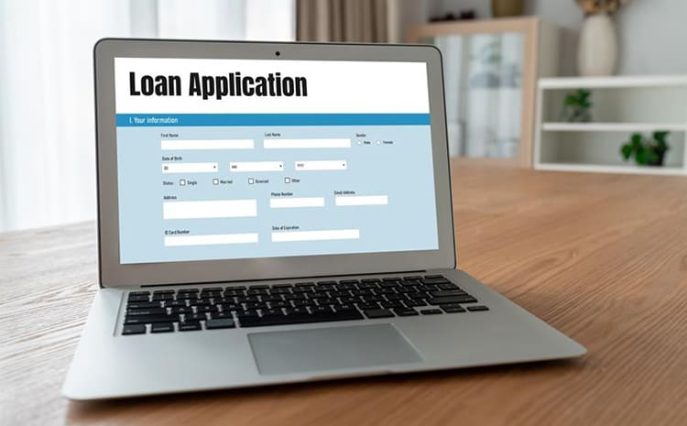
In the latest year, 2025 and beyond, notably, the lending landscape is evolving at a swift pace, especially for the small and regional banks in the United States. All in all, these banks are under increased pressure to speed up their home loan approval procedure while also keeping the costs low and maintaining compliance.
Above all, one area where transformation is happening at a quick pace is the mortgage underwriting process. In earlier times, this process was extremely slow, manual, and prone to human errors, and also required loan officers to sift through piles of pay stubs, bank statements, and tax returns.
On the whole, not only was this a time-consuming process, but it also introduced the risk of human oversight, especially when evaluating the complex financial profiles of self-employed borrowers or small business owners. For this purpose, by adopting automation, banks can now streamline and digitize the review of financial documents, aiding the loan officers to make accurate and quick decisions.
Modern tools can automatically categorize, extract, and analyze the data from the bank statements, making it easier to assess the borrower’s financial situation and calculate their debt-to-income ratio (DTI). Eventually, this minimizes the underwriting time and also enables quicker conditional approval.
For instance, according to a recent study, lenders using automated tools have reduced the loan decision times by up to 60% and reduced default rates by 18%.
All About Bank Statement Analyzer
A bank statement analyzer is essentially a digital tool that is mainly used during the mortgage underwriting process to read and evaluate a borrower’s financial information automatically through their bank statements. Rather than manually reviewing printed documents, this tool uses Artificial Intelligence (AI) and Machine Learning (ML) to extract details like regular income, recurring monthly debt, overall financial situation, and spending habits.
To put it another way, it can flag unusual transactions, spot patterns, and also generate summaries that help the underwriters assess creditworthiness more quickly and accurately. As in 2025, automation has become truly essential. Loan officers and loan processors at the small and regional banks are using this technology to simplify the pre-approval process. Granted, for the underwriter, it minimizes the time spent verifying deposits or even calculating the debt-to-income ratio (DTI).
Also, the loan processor ensures all key numbers are correct and easier to verify, especially when handling loan applications from self-employed individuals or small business owners who want a lower interest rate. And for the borrowers, this results in quick decision-making regarding refinance and personal finance, and fewer requests for additional documents.
With the right analyzer, data from pay stubs, credit reports, credit history, employment history, and tax returns can be cross-verified with real-time insights and closing costs. Provided that this not only improves speed and accuracy, but also boosts confidence throughout the mortgage loan process, while making it efficient and innovative for everyone involved, in need of some additional information.
Why Does it Matter for Regional and Small Business Lenders?
In today’s fast-evolving lending market, regional and small banks are facing growing competition from large financial institutions that make use of sophisticated technology to approve loans quickly. Surely, one area where smaller banks can catch up is the mortgage underwriting process. By adding a bank statement analyzer to their toolkit upon eligibility, lenders can automate the crucial steps in the underwriting process without making any huge investments. Of course, these tools are low-cost but high-impact upgrades that can transform how banks evaluate a borrower’s financial situation and speed up the entire loan decision-making system.
With the help of a bank statement analyzer, small lenders can compete more effectively in 2025 by offering accurate and quick decisions, especially for first-time home buyers, self-employed applicants, and people with irregular income. Provided that these borrowers often struggle in manual systems due to non-traditional income types, conventional loans, or missing documents. Automated tools usually help in identifying reliable income sources and also calculate the debt-to-income ratio (DTI) instantly, making the mortgage underwriting process seamless for everyone.
Key Functionalities of a Modern Bank Statement Analyzer
Automated Data Extraction
A good analyzer reads the bank statements with the help of AI and OCR to extract transaction data automatically. It reduces manual data entry errors and saves time for the loan processor and the loan officer. Moreover, this in turn speeds up the entire process of the loan decisioning system and also ensures accuracy in the financial calculations.
Income Pattern Recognition
Modern bank statement analyzer identifies the consistent deposits that reflect income, even when no formal pay stubs are available. This is super beneficial for self-employed borrowers, and also for those with irregular incomes. It enables the underwriting process to proceed confidently even in complex financial scenarios.
Expense Categorization
The modern bank statement analyzer sorts the expenses into categories like utilities, rent, and credit card payment history. Surely, this helps in calculating the debt-to-income ratio (DTI), which is a key part of the mortgage underwriting process. On the whole, it provides a clear summary of the borrower’s financial situation.
Fraud Detection
It is with the help of modern tools that help in flagging unusual activity like duplicate transactions, sudden large deposits, and more. This improves the loan type by identifying the red flags at an early stage, while also extending support to lenders in making risk-aware decisions during the underwriting process.
Real Time Data Analysis
Admittedly, the best analyzers work in real time, enabling the loan officer to get instant results. This shortens the time between loan application and conditional approval, while also creating a quick and more responsive automated loan approval system.
Role in the Broader Loan Decisioning System
Streamlining the Mortgage Underwriting Process
Well, by reviewing the income, bank statements, and monthly debt automatically, the analyzer speeds up the entire mortgage underwriting process. This, in turn, reduces or eliminates the need for manual calculations and repetitive document checks. Moreover, this enables the loan officers and also the underwriters to focus on high-level decisions instead of relying upon error-prone paperwork.
Integrating with Loan Origination Platforms
Granted, modern analyzers integrate seamlessly with the Loan Origination Systems (LOS), syncing the data into the loan decisioning system in real time. This, in turn, creates a single workflow from the loan application to the final decision. Hence, it further ensures that the key financial metrics, such as creditworthiness and debt-to-income ratio (DTI), are both automatically calculated and applied.
Improving Decision Speed in the Underwriting Process
In short, when a borrower submits their financial documents, the analyzer processes them instantly. It not only supports the automated loan approval system by rapidly confirming the income but also spots the risk factors. Notably, banks can issue conditional approval within just a few hours, and not days.
Reducing Human Error and Increasing Compliance
Specifically, by automating the calculations and checks, analyzers can minimize the common mistakes involved in the manual underwriting process. Moreover, they create audit-ready logs, which in turn help with internal reviews and also compliance with standards like NMLS. This makes the mortgage underwriting process and mortgage approval more reliable and secure.
Enhancing Borrower Experience
Naturally, for a borrower, using a bank that relies on a smart automated loan approval system would lead to less back and forth for additional documents and quick feedback. Moreover, this shows professionalism and also builds trust. In today’s competitive market, such a smooth letter of explanation may be the deciding factor for first-time home buyers choosing a lender.
Mortgage Underwriting Process and Where Bank Statement Analysis Fits
Admittedly, the mortgage underwriting process in 2025 has become much faster, digital, and more data-driven - especially for the regional and small banks that are looking to compete with larger institutions. It begins with the loan amount application, followed by the intake of documents such as pay stubs, bank statements, and tax returns. Once these necessary documents are collected, the bank statement analyzer will take the next step.
This tool scans and then interprets the borrower’s financial data in real time, becoming a crucial part of the automated underwriting process. In short, in today’s super competitive lending market, having a bank statement analyzer integrated into the automated loan approval system is not only helpful but a necessity. It improves accuracy, speeds up processing, and gives the smaller banks the agility that they require to move from application to clear to close with confidence.
Conclusion
The lending world in 2025 is moving at a much faster speed than we can even imagine. Hence, the mortgage underwriting process must evolve to keep up with the increasing borrowers’ expectations and growing competition. Today, borrowers are looking for answers, complete transparency, and reduced paperwork, and the small and regional banks must evolve to meet these demands. Naturally, traditional manual reviews are no longer enough.
Hence, it would be ideal to adopt smart tools such as a bank statement analyzer, which enables lenders to modernize their underwriting process, stay compliant, while also reducing delays.
Ready to simplify and scale your mortgage application? Discover how Biz2X can transform your loan workflows with intelligent automation.
FAQs About the Mortgage Underwriting Process
1. How does a bank statement analyzer handle joint bank accounts?
A bank statement analyzer can identify joint accounts and separate transactions based on deposit sources or spending patterns. This helps underwriters assess each borrower’s contribution to income and expenses during the mortgage underwriting process.
2. Can a bank statement analyzer detect undisclosed liabilities or debts?
Yes. Advanced analyzers can flag recurring credit card payments, personal loans, or monthly debt obligations that may not be listed in the loan application. This improves the accuracy of the underwriting process and reduces risk.
3. Is a bank statement analyzer useful in cash-heavy or informal income scenarios?
Absolutely. In cases where self-employed individuals or small business owners receive informal income, analysts can track consistent cash deposits and help validate income sources, supporting fairer loan decisioning.
4. What types of fraud can a bank statement analyzer help detect?
It can identify altered documents, synthetic identities, duplicate statements, and large unexplained deposits. These fraud checks enhance security within the mortgage underwriting process.
5. How does this technology support post-close quality control?
Bank statement analyzers keep detailed logs and audit trails. These records are useful for post-closing reviews, ensuring the loan decisioning system remains compliant throughout the process.