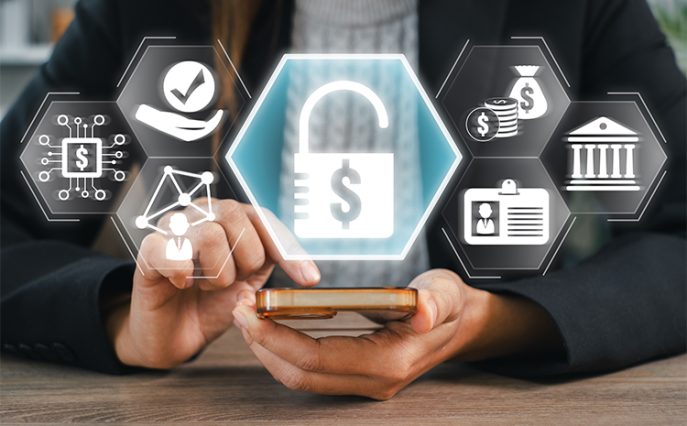
Lenders work with very sensitive data. They handle personal details like Social Security numbers, bank account information, credit scores, and income data. A single data security or compliance breach can lead to significant fines and reputational damage. Every lender must use strong security measures and follow strict rules, including adherence to NMLS guidelines.
When you work with data, you need to follow laws such as GLBA, FCRA, SOC 2, GDPR, CCPA, and even specific state regulations like those in New York. These rules force lenders to protect information carefully. Using secure lending technology solutions not only protects data but also builds customer trust and ensures lenders are prepared for audits and inspections.
What Is Secure Lending?
Secured lending is a financing arrangement where borrowers pledge an asset (collateral) to the lender, such as a home, car, or investment, to secure a loan. This reduces lender risk and allows for lower interest rates, higher borrowing limits, and longer repayment terms. If the borrower defaults, the lender can legally seize the asset.
The use of the latest tools and technologies in secure lending helps protect information at every step. For example, good loan origination software makes sure that the application process is safe. Similarly, strong loan servicing software helps manage repayments and account details securely.
In simple words, using smart technology can help stop data breaches and misuse. Secure lending technology solutions ensure that every part of the lending process is safe from the moment a customer applies for a loan to the final repayment. Fintechs use secure lending technology solutions to help lenders protect their systems and data.
Shortcomings of Traditional Lending Solutions
For many lending institutions, the goal of building strong relationships conflicts with the daily reality of manual paperwork slowing the loan application process. Growth is the objective, but outdated technology creates frustrating bottlenecks for talented teams.
This constant friction between your strategy and your systems is the single biggest barrier to growing your portfolio. When your current software can’t keep up, the consequences are felt across the entire organization.
- Loan officers are bogged down in paperwork while agile competitors win your best deals.
- Data is trapped in separate systems, making compliance reporting a risky and uncertain process.
- Increasing operational costs are quietly eating into the profitability of every loan you close.
- Outdated risk models make your loan portfolios vulnerable to defaults you never anticipated. This makes effective portfolio management more challenging.
- An irregular application process sends borrowers straight to competitors that offer modern fintech secure lending technology solutions.
- Lack of real-time insights and post-launch support limits your ability to respond quickly to market changes and borrower needs.
- Traditional systems have low operational efficiency, which makes it difficult to streamline processes and maximize productivity.
Modern secure lending technology solutions provide real-time insights into loan performance and borrower behavior to directly address these shortcomings.
Key Features of Secure Lending Technology Solutions
Digital Onboarding: Gone are the days of filling out paper forms and submitting hard copies of documents. With digital onboarding, customers can now submit their details online, including their phone number, making the entire lending process faster and more efficient. Secure online forms, e-signatures, and digital document uploads streamline customer acquisition.
Advanced KYC Checks: One of the cornerstones of secure lending technology solutions is the integration of enhanced KYC verification. Through KYC, financial institutions can verify the identity of their customers and assess their creditworthiness digitally. This process includes real-time document verification, facial recognition, and cross-referencing databases like PAN, Aadhaar, or voter ID to ensure complete accuracy and compliance.
AI and Data-Driven Insights: Artificial intelligence plays a pivotal role in secure lending technology solutions. With AI-powered machine learning algorithms analyzing vast amounts of data, lenders can make faster, more accurate decision-making. These systems can predict credit risk, optimize lending terms and pricing, and provide real-time recommendations based on borrower behavior and financial history.
Blockchain for Transparency: Blockchain technology is making a huge impact on secure lending by providing transparency and reducing fraud. It creates an immutable ledger that records all transactions securely, ensuring both lenders and borrowers have access to verified data at all times.
Instant Loan Approval and Disbursement: Traditional loan approval processes could take days, even weeks. With digital transformation, borrowers can now apply for a loan and receive approval within minutes. Thanks to automation and data-driven insights, loans can be disbursed almost instantly, helping borrowers access funds when they need them most.
The Rise of Deepfakes and Identity Theft Threats
Deepfakes and identity theft are two issues that have made the concept of zero trust essential for the development of safe lending software companies. Deepfakes are fake videos or audio created using artificial intelligence that mimic real people. Hackers are using these fakes to steal identities and deceive lenders into approving loans that are fraudulent. In 2025, there was an estimated loss of over $500 million for banks worldwide due to deepfake fraud. Identity thefts increased by 30% alone in the last year.
In the case of identity theft, the traditional approach of checking once will not work. The thief will easily obtain the ID or the documents. Secure lending technology solutions solve the problem. It checks every move made by the user. No user is granted access. The concept of continuous authentication checks the sessions in real-time. It detects unusual patterns such as typing speed and movement of the mouse.
The Function of Behavioral Biometrics
Incorporating behavioral biometrics will create an additional layer to help secure lenders' technological platforms. While traditional authentication methods, such as a password or biometrics, can provide some measure of protection, they do not track how a user operates. The combination of how a person develops their typing pattern, moves their finger across a screen, or tilts their device creates a unique profile for that user. Because hackers can steal a user's credentials, it's not possible for hackers to duplicate their behavior.
Behavioral biometrics are continuously monitored by the system as part of the continuous authentication process. If a fraudster logs into an account with a deep fake, the system can easily detect the mismatch. For example, when a legitimate user is consistently typing, a fraudster will tend to type inconsistently.
The lending ecosystem verifies all borrower interactions from the time that the borrower submits the application through to when they repay. All borrower interactions are validated with behavioral biometrics capabilities while not hindering the user experience. As a result, lenders have a much greater confidence level when using secure lending technology solutions.
Secure Lending Technology Solution Advantages
The increased security provided by secure lending through the use of advanced KYC checks and blockchain technology lowers the risk of fraud and ensures that only genuine borrowers will be approved for financing due to the verification process.
Quicker loan processing can take place because of automation, resulting in much shorter approval times and document checks compared to traditional methods of financing.
An improved client lending experience results from the combination of digital onboarding and easy-to-navigate interfaces, making it easier for clients to apply for financing and manage their accounts.
Financial institutions reduce operational costs by performing less manual work, thereby passing on the savings to their clients.
Implementation Strategies for Vendors
Follow the five steps to implement secure lending technology solutions:
1. Evaluate deepfake/identity theft flaws in current systems.
2. Choose zero trust with constant authentication.
3. Incorporate behavioral checks into onboarding and maintenance.
4. Educate workers on recent warnings and adherence.
5. Dashboard dashboards for real-time information should be used for monitoring and scaling.
Conclusion
Secured lending technology solutions are not just a technological upgrade. It is a complete transformation of the commercial lending platform landscape. By embracing digital tools, automation, and advanced KYC checks, financial institutions can offer faster, more secure, and customer-friendly lending solutions. The future of lending is digital, and with the right tools in place, businesses, including small business lenders, can provide a seamless experience for both lenders and borrowers.
As we continue to embrace this digital transformation, the role of KYC checks will remain critical in ensuring the safety, security, and efficiency of the entire process. With secure lending technology solutions, you can be at the forefront of this transformation, delivering better outcomes for your business and your customers.
FAQs Secure Lending Technology Solutions
1. What are secured lending technology solutions?
Secure lending technology solutions offer loans in a way that protects all sensitive data. It uses the latest safety technologies to protect customer information at every step of the lending process.
2. What are the 4 Cs of lending?
When determining whether someone is eligible for a loan or credit account, a lender will typically evaluate the applicant's character, capacity, collateral, and capital. These attributes are used to measure how reliable borrowers are in paying their obligations as per agreed-upon terms. Many prospective lenders are not clear about these four areas of evaluation.
3. What are examples of secured lending?
Common examples of secured loans are auto loans, mortgages, and some types of business financing. A lender can repossess the collateral if you default on a secured loan, which means more risk for you if you fail to repay.
4. How to find secured loans?
Finding secured loans involves identifying lenders like banks, credit unions, or online lenders that offer financing backed by collateral such as property, vehicles, or savings. To secure the best rates, compare offers for low interest, check for fees (origination, application), and ensure your asset value supports the required loan amount
5. What is a digital ecosystem?
A digital ecosystem is a network of interconnected digital technologies, platforms, and services. All these work together to increase business operations and drive innovation. Also, it helps organizations to collaborate, share data, and optimize processes for improved efficiency.