 back to all posts
 Loan Origination System
Loan Underwriting Systems in Banking: Streamlining SME Lending

By Biz2x Team December 31, 2025

The loan underwriting system assesses the risk of the borrower while borrowing loans in a loan origination system (LOS). Underwriting in commercial lending is a little different than the individual borrower loan underwriting. SME loan underwriting in banks is done through which lenders and financial institutions can get information about the creditworthiness and risk associated with applying for loans for the business.
When the borrower submits the loan application, then the underwriting process comes into play. Risk assessment is done through going through the past credit decisions, credit score and credit history. Automated underwriting uses artificial intelligence and Machine Learning to carry forward the risk assessment. Once the underwriters approve the loan application, the loan approval is done.
For example, if a fintech SME applies for a business loan. The loan underwriting system decides whether the file moves today or sits there for a week. The underwriting algorithms will evaluate the loan application. Deciding if the business holds the eligibility for the loan.
Automated underwriting systems are advanced underwriting systems using AI and ML technologies to smooth out the decision-making process for the lenders. It fastens the loan approval process. It is considered better than manual underwriting systems, as the turnaround time is lesser for loan approval. Automated underwriting systems automatically assess the credit risk through the financial history in real time.
It works to improve the customer experience throughout the process of loan approval. Here are the steps of the underwriting process in the loan underwriting systems:
First, the financial data of the borrower is collected through their financial statements from digital forms or third-party data providers.
Once the data is collected, artificial intelligence comes into play, where the risk and potential losses are considered for the decision-making. Credit reports, past credit score, debt-to-income ratio, and employment history are considered in the risk assessment. This is where things slow down in the manual underwriting system.
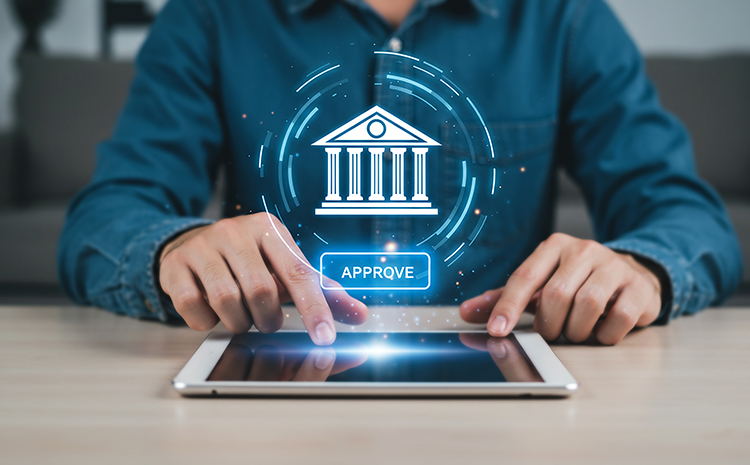
Provides instant ‘approve,’ ‘deny,’ or ‘refer for review’ decisions based on the analysis.
Once approved, regulatory checks (KYC, AML, etc.) are performed automatically, and documentation is generated.
At scale manual underwriting systems majorly depend on a loan officer to carry out the risk assessment before the lender approves the loan. A human underwriter manually reviews all the documents submitted by the borrower related to income and assets. The risk factors are also assessed. Oftentimes it requires a lot of manpower. The workflows slow down and the loan approval process can take weeks or sometimes months. Manual underwriting is also more prone to human error.
Automated loan underwriting systems take a different route. Instead of depending on manual checks at every stage, automated loan underwriting systems apply predefined artificial intelligence rules and algorithms to evaluate borrower eligibility and creditworthiness. Financial data is pulled automatically, and credit reports are checked in real time. Income validation and risk assessment happen in the background. Lenders to move through loan applications faster.
Scalability is where the difference becomes obvious. Manual underwriting can only grow by adding more people, which raises operational costs and can still create bottlenecks. Automated underwriting systems handle higher volumes better. Manual setups don’t. For SME lending, where speed and turnaround times directly affect customer experience, this matters a lot.
Compliance and risk management also look different under automation. Automated underwriting systems apply underwriting policies consistently to maintain audit trails and reduce dependence on individual judgment. For banks and NBFCs working under tight regulatory oversight is difficult to achieve with purely manual underwriting processes.
Automated loan underwriting has made loan disbursement processes faster, but human review still plays an important role in some complex cases.
The underwriting process is not the same for every type of loan because different types of loans have different types of risk involved. A business loan, a home loan, and a personal loan all carry different risks, and the loan underwriting system adapts accordingly. Below are the four common types of underwriting:
Used by banks and NBFCs to decide whether to approve loans such as personal loans, business loans, home loans, and car loans. Underwriters look at practical factors like monthly income, credit reports, collateral value, and how the funds will be used. Based on this review, lenders decide whether to approve or reject the application and, if approved, what interest rate makes sense for the risk involved.
Insurance underwriting is how an insurance company decides whether to insure you and at what price. When you apply for insurance, the company looks at the risk involved. Insurers assess the likelihood of the insurance company paying the claim. On the basis of this, the company decides how much the premium should be.
For example, with car insurance, the insurer checks the age, accident history, lifestyle habits, etc. After assessing these, the premium is decided. If the driver seems to be a reckless one, then the premium goes up as compared to a safe driver.
In a mortgage loan, the process is usually more detailed than a personal loan. The underwriter checks the borrower’s employment status, savings, existing liabilities, and overall creditworthiness. With the help of automated underwriting in loan origination systems, the processing time is now faster using AI technologies. Faster risk assessment helps in faster lending decisions. Underwriters verify employment stability, existing obligations, and long-term repayment ability.
Used in capital markets when banks or financial institutions help companies raise money through shares or bonds. The underwriter evaluates risk and pricing for investors. Mostly occurs during a company’s IPO. Until those securities are sold, the risk sits with the underwriter.
Underwriting systems allow lenders to approve or reject applications quickly, often in real time. This keeps turnaround times short while ensuring lending decisions stay consistent and within risk limits.
Automation makes the underwriting process simpler and faster by reducing the need for manual checks at every step. Instead of loan officers reviewing documents and details one by one, the system automatically collects information, verifies documents, and applies basic eligibility rules. Important details like credit information, income checks, and risk indicators are visible in one place and updated in real time, so teams don’t have to wait for reports or multiple approvals. This helps lenders make quicker decisions on SME loan applications while still following all required rules. Built-in compliance checks, such as KYC and internal policies, ensure that speed does not come at the cost of safety or accuracy, and loans move smoothly from application to approval.
The system of loan underwriting is evolving due to the increasing amount of borrowed funds and stricter regulations demanded by the regulators. According to Reserve Bank of India (RBI) data, MSME credit is growing, which results in the demand for an automated loan underwriting system. The share of MSME credit in total bank lending reached an all-time high of 17.7%, with outstanding loans exceeding Rs. 14,30,000 crore (US$ 167.06 billion) by the end of May 2025. The aim is not simply to grant loans more quickly now but to continue to make decisions faster, transparent, and manageable even in the case of bigger and more complex loan groups.
With the increase in loan requests, Indian fintech firms, as well as banks, now use automatic underwriting systems instead of doing it manually. Automation allows lenders to accelerate routine loan checks with a set of rules and checks. Automation handles the routine checks. Rules run in the background. Decisions move faster.
Risk checks no longer stay fixed at one point in time. AI-driven underwriting systems consider trends in financial data, repayments, and financial history to flag risk. Such models assist lenders in looking at warning signs and differences that the outdated methods would mostly fail to detect. At scale AI provides additional hints concerning enhanced decisions to underwriters, rather than disregarding human judgment.
Regulators decide how underwriting systems should work. Banks and NBFCs must clearly show how and why they approve or reject a loan. Every credit decision needs to follow the same rules and be recorded properly. The current systems have thus been constructed using audit trails, explicit rules, and reporting devices. This assists banks and NBFCs in fulfilling regulations and retaining authority on the selection of loans.
A loan underwriting system helps bring order to the loan approval process. All financial details, credit checks, and basic eligibility rules are checked in one place. When underwriting is connected with the loan origination system, lenders can process business loans faster without losing control or missing important checks.
A practical loan underwriting solution, combined with reliable commercial loan software, helps banks reduce approval time, improve accuracy, and manage higher loan volumes with the same level of control. For borrowers, this means quicker responses and fewer delays. For banks, it means smoother operations and less stress as lending demand continues to rise.
Loan underwriting software handles the underwriting process. The LOS is in charge of the entire loan origination process. Both systems liaise in end-to-end lending.
It assists in cash-flow analysis, collateral checking, pricing regulations, and multiple levels of approvals. It also has good audit trails and compliance tools.
Yes. The software allows API integrations to all major Indian credit bureaus and other sources of data.
Automation saves time on data entry, eliminates bottlenecks, enhances accuracy, and saves time on processing. It provides uniform decisions.
Most lenders start with a pilot (36 months) and proceed with products (612 months). Governance and training are useful in facilitating adoption.


*All fields are mandatory