 back to all posts
 Digital Lending Platform
How Digital Lending Platforms for Small Businesses Overcome Major Lending Challenges

By Biz2x Team November 26, 2025
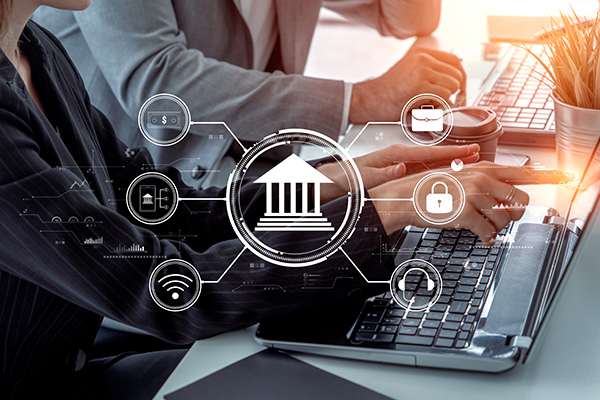
In recent times, digital lending has led to a revolution in loan processing and made loan origination and loan approvals much simpler and quicker. Digital lending is the practice of offering loans online rather than through traditional, in-person methods. Borrowers can apply, have their loan approved, and receive funds through websites or mobile apps. Lenders transfer funds directly to the borrower’s bank account, and borrowers repay the loans online. This digitisation eliminates the need for physical paperwork, accelerates the lending process, and streamlines lending.
Digital lending platforms for small businesses give them the ability to gather customer data, identify consumption trends, and even minimise the need for human intervention. As a result, the MSME lending landscape is changing as small business owners enter a new stage of growth with financial inclusion.
Today’s customer, whether consumer or small business, has become very comfortable and accustomed to anytime, anywhere self-service. The necessities of a digital-first approach were greatly magnified during the pandemic, with many banks having to close branches and rapidly adopt new digital technology. Digital lending platforms for small businesses are helping in maintaining a unique relationship with banks and fintechs for fast and easy loans.
The digital lending market in India has witnessed substantial growth over the past decade. The market value of digital lending in India was estimated at approximately USD 75 billion, and it is projected to grow at a compound annual growth rate (CAGR) of 22% to reach $515 billion by 2030. This explosive growth is driven by increasing internet penetration, the proliferation of smartphones, and the rising preference for online financial services.
This article talks about the benefits of digital lending platforms for small businesses, and it is helping small businesses grow.
AI-powered digital lending platforms for small businesses offer the following end-to-end lending benefits:
Small businesses frequently go unnoticed by traditional lending institutions because of their meager loan amounts and unstable earnings, seen as risks. SMEs are finding it easier to expand their businesses through digital lending platforms because they are more accessible and easier to use. For instance, in peer-to-peer (P2P) lending, potential lenders and borrowers are matched directly. Modern technology has sped up and improved the application process and underwriting, encouraging more business owners to use business loans to grow or put working capital into their operations.
Digital lending platforms for small businesses help access various cost-effective management tools ranging from client profiles to accounts, which were previously unaffordable. With the support of online accounting solutions, digital lending platforms for small businesses can monitor their cash flow in real time while ensuring that their business runs smoothly. For example, these accounting solutions integrate business credit to automatically pay off loans, lines of credit, and credit cards from customer receipts. Digital lending platforms for small businesses can manage expenditures and invoices, which helps concentrate more on development and growth, thus making their business more efficient.
The widespread use of the internet and mobile devices in recent years has led to the development of digital banking solutions. Digital lending platforms for small businesses lower the cost of fund transfers and eliminate the need for physical currency notes for all transactions. This has led to a more competitive and resilient business ecosystem as the financial system has become more transparent and less susceptible to tax evasion or other fraudulent activities.
Every business faces a severe risk from data breaches, which are not always preventable. Small businesses frequently lack the tools and expertise necessary to protect their data and their contacts, vendors, and buyers. Given the availability of numerous software packages, such as multi-factor authentication, e-signatures, etc., digital financing platforms have made cybersecurity an affordable solution. Digital lending platforms for small businesses enhance the security protocols by upgrading the systems/software from time to time. Also, the digital lending platforms offer accessibility and prompt assistance, ensuring that data protection and cybersecurity requirements are fulfilled.
Digital lending platforms for small businesses help automate payments to reduce cash flow challenges. For small businesses, digital invoicing offers conveniences like adding signatures effortlessly, sending invoices instantly, and receiving payments almost immediately. The advanced technology eliminates human interaction, reduces the need for cash transactions, and improves cash flow by decreasing cash outlays.
Different kinds of digital lending business models are helping banks and financial institutions to grow and become successful. The most popular ones are as follows:
SME lending assists small businesses by funding activities such as relocation, hiring, marketing, and introducing new products.
The usual lending process has many gaps and issues that make it difficult for a small business to get a loan. This is also causing problems for banks and financial institutions to process loans faster. This is the reason why a digital lending platform for small businesses is needed today to keep up with the modern lending ecosystem.
For instance, many apps provide instant loan services to young working professionals and college students. Borrowers can apply for small loans, often sent through instant credit to a third-party wallet or bank account.
The applicants’ borrowing limit will increase over time based on multiple factors, including timely loan repayments. Borrowers can repay the debt in a fixed amount of time with a nominal interest charge. These entities don’t ask their customers to submit physical documents or visit the branch for instant personal loans. They can easily apply for the loan online on their mobile app.
Several Indian app-based consumer lending platforms have partnered with RBI-registered NBFCs to offer salaried and self-employed individuals instant personal loans. These companies aim to address the concerns of India’s vast underbanked population. For this reason, they are already transforming from a micro-lending platform to providing a full suite of offerings. This includes offering gold savings and insurance services, among others. Borrowers can get loans for a shorter duration, but the interest rates are on a much higher side.
Digital lending platforms for small businesses in India harness the power of big data and analytics to make informed lending decisions. By analysing extensive data, including credit scores, business performance metrics, and even social media activity, these platforms can accurately assess the creditworthiness of applicants. This data-driven approach minimises risk and improves the precision of loan approvals.
Artificial intelligence (AI) and machine learning (ML) are integral to many digital lending platforms for small businesses. These technologies enable the development of high-end risk assessment models that learn and adapt over time. By continuously analysing data patterns, AI and ML can predict loan defaults more accurately, allowing lenders to offer competitive interest rates and terms to reliable borrowers.
Blockchain technology is making its mark in the digital lending landscape by offering enhanced security and transparency. Smart contracts on blockchain can automate loan disbursements and repayments, ensuring that all transactions are tamper-proof and verifiable. This reduces the risk of fraud and builds trust between loan providers and borrowers.
Digital lending platforms for small businesses are here to stay, and there is enough evidence to prove it. As every process has switched to digital mode, the lending process has also witnessed a transformation to digital mediums. The best part is that borrowers or lenders do not need much effort to find digital lending software or systems that improve their work.
Digital lending platforms for small businesses have changed the landscape for small and medium businesses and startups worldwide. It has helped in creating, innovating, evolving, and expanding their businesses. By embracing digital lending through innovative technology, the lending industry can become more streamlined and efficient.
Digital lending in India refers to loans facilitated through online platforms and digital channels, typically in partnership with financial institutions. This initiative involves the use of technology such as mobile apps, websites, and data analytics to simplify the lending workflows, from application to disbursal.
The main risks involved in taking digital loans include high interest rates, hidden fees and charges, data privacy and security concerns, and the possibility of falling into a debt trap if not repaid on time. It’s important to thoroughly research and understand the terms and conditions before borrowing.
Digital lending revolutionised banking by quickening the loan process and credit decisions, making it more accessible and efficient. It also lowers the cost and enhances customer experience through innovative financial products that minimise the hassle. That’s why it will not be incorrect to term digital lending as the future of finance and banking.
Contemporary digital lending platforms are highly customisable and enable the entire range of secured (e.g., home, car, gold loans) and unsecured (e.g., business, personal) loan products. It does so with customised workflows, automated document checking, and risk assessment appropriate for each loan product.
Peer-to-peer lending platforms directly connect individual lenders and borrowers. They typically operate outside the traditional banking infrastructure. Whereas digital lending platforms are designed to serve regulated entities, such as banks and NBFCs with large-scale loan lifecycle automation and compliance.


*All fields are mandatory