
 back to all posts
 Customer Relationship Management Software
Compliance and Security in CRM for Financial Institutions

By Biz2x Team May 22, 2026
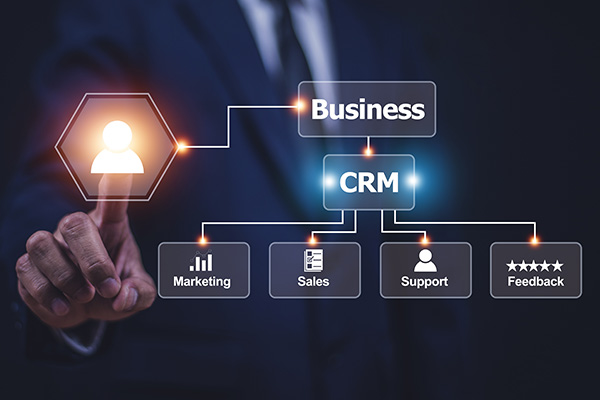
The CRM software for financial institutions available today, including platforms like Salesforce Financial Services Cloud, Microsoft Dynamics, and HubSpot, is the most important tool that helps in managing sensitive data, given the constantly evolving regulatory environment. Understanding the pricing of these solutions is crucial for adoption. Due to the rise of cyber risk and the enforcement of evolving regulations regarding the protection of personal data, banks and other lenders are facing greater scrutiny than ever from their customers. For example, in India, with legislation such as the Digital Personal Data Protection (DPDP) Act, lenders in the United States are looking for compliant solutions that also promote operational efficiency.
In today’s financial institutions, compliance is much more than a legal requirement. It’s part of an organization’s strategic financial planning to remain in good standing. Lack of regulatory compliance has severe consequences, including fines, damage to reputation, and loss of trust of clients. An example of the growing global trend toward an increase in regulatory oversight of data is the recent adoption of the Digital Personal Data Protection Act (DPDP) in India.
Smaller banks and community banks that operate in the US are required to comply with international best practices for managing cross-border transfers of data, thus creating the need for a well-defined CRM for financial institutions’ processes to protect customer data, keep records of consent for use of customer data, as well as perform audits of data usage and to respond quickly to regulatory activity. This ability to create a “regulatory compliance machine” by developing intangible processes internally creates strengthened external confidence in financial institutions.
A solid open-source CRM for financial institutions should offer much more than just a means to store basic data. It must also offer ways to protect, monitor, and manage sensitive data.
Current-generation systems can utilize some of the highest-quality encryption algorithms available today to protect your customers’ data in storage as well as while in transit. They can also apply a role-based access control scheme, which limits the ability to modify or view sensitive information only to authorized personnel, minimizing the internal risks of exposing confidential information.
Financial institutions also benefit from the granular levels of permissions afforded through role-based access control (RBAC), so banks can tailor their RBAC permission structure to specific needs throughout their organizations, thus supporting compliance with the rapidly changing regulatory environment across the world.
Managing consent is an important key to leveraging the data collected under a DPDP structure for future use by organizations. Open-source CRM for financial institutions systems include tools to help organizations document when and how an individual has given permission for the business to use their personal information.
Every action performed in a secure CRM for financial institutions will be logged. These logs allow institutions to identify changes in client data as well as flag unusual activity. Audit trails are an essential part of regulatory audits. They are also important for maintaining internal governance and accountability. Therefore, all modifications of client information will be detected, whether they were authorized or not.
Some advanced AI-powered CRMs offer financial risk analytics tools for detecting irregularities in client transactions, including those involving credit card usage. With the ability to receive these alerts in real-time, financial advisors are able to streamline potential fraud before they escalate into serious problems. Advanced CRMs use predictive analysis and forecasting to improve risk assessment and detect fraud.
CRM for financial institutions must allow for secure integration with any existing systems, such as loan management systems, payment gateways, and compliance software, streamlining workflows. Organizations are able to operate much more efficiently and reduce errors resulting from manual data entry by incorporating additional tools, thereby optimizing their business processes. Finally, organizations have confidence that there will be consistent decisions throughout all of their different areas.
Having a specialized CRM for financial institutions allows for less fragmentation of your existing data governance. By bringing together all customer information in one location (in a secure location), you improve visibility and reduce duplication, allowing you to optimize data management. You are able to establish standardized processes to ensure consistency. In addition, you will have a more organized way to manage sensitive data across your divisions. For example:
Automation has a major impact and has simplified compliance. Prior to automation, companies would complete the majority of compliance processes by hand, which was not only time-consuming but also created many opportunities for human error, thus causing delays. Using a CRM for financial institutions with in-built workflow automation helps automate workflows for compliance tasks like KYC verification, document tracking, and regulatory reporting.
With less focus on repetitive tasks and the ability to complete compliance activities in a timely manner, financial institutions can devote more resources to focus on growing their business needs, leveraging tools like marketing automation, email marketing, and optimizing sales processes to cross-sell services. The PWC statistical analysis indicates that digital transactions in India increased by 56% in volume between fiscal years 2022 and 2023. Therefore, with the rapid growth of digital transactions, it can be assumed that companies will need a robust, compliant system to manage their financial data digitally.
Here are some of the most recent trends in CRM for financial institutions:
Financial institutions are investing more money into security-focused CRM technologies. These tools provide enhanced protection of sensitive customer data through advanced security technologies. The demand for these technologies has continued to grow due to increased regulation within the financial industry and an increase in cyber threats.
According to the IBM Cost of a Data Breach 2024 report, the average global breach cost has reached USD 4.88 million, a significant increase over last year’s USD 4.45 million and the biggest jump since the pandemic.
More financial institutions are implementing cloud-based CRM systems. Companies can benefit from using cloud-based CRM for financial institutions solutions because they are far more flexible, scalable, and secure than traditional on-premise solutions.
Because cloud-based CRM solutions are off-site, they also receive regular maintenance and updates to ensure compliance with regulations. By utilizing cloud-based CRM systems, financial institutions will have the ability to stay current with changes to the industry and adapt quickly to any new regulations.
Numerous organizations still utilize legacy systems with insufficient security capabilities, thus exposing them to non-compliance with modern compliance requirements. Additionally, customer data is handled manually, which increases the likelihood of data breaches or errors as well as decreases the efficiency in managing client relationships.
It also takes longer to produce timely reports, leaving organizations exposed to additional regulatory risk. Therefore, the implementation of a specialized CRM for financial services is vital to an organization’s long-term success.
Finding the appropriate CRM for financial institutions requires an analysis of what your business requires. Each CRM platform will not provide security features or compliance features to the same degree. As an institution, whenever you evaluate CRM solutions, you want to ensure that they will meet your needs.
A well-rounded CRM for financial institutions is a complete all-in-one integrated platform that will assist in the various functionality of the business, such as lead management, improving customer interactions through automated follow-ups and customizable templates, and providing an overall positive customer experience, including personalized service. As a result, this will be an extremely important resource for modern financial institutions.
In addition to ensuring compliance, a secure CRM for financial institutions can also create a stronger client engagement by offering reliable and consistent services, leading to improved client retention. With a focus on data security, clients feel more comfortable with the institution and will be inclined to be loyal customers for a longer period of time.
According to Grand View Research, the global customer relationship management market size is expected to reach USD 163.16 billion by 2030. The maturation of CRM platforms will help drive the growth and adoption of CRM across different industries, including financial services, insurance companies, wealth management, and advisory firms. As regulatory requirements change (i.e., increasing compliance), CRM systems will have to adapt to accommodate these changes and provide new features to support growing compliance while continuing to operate normally without causing interruptions.
A CRM for financial institutions system that is secure and meets compliance needs cannot be overlooked by an organization any longer. An institution must have access to an effective and compliant process in order to maintain operational integrity when dealing with more sensitive financial information.
If you are considering increasing compliance, reducing risk, and improving customer information, you should consider implementing a CRM system. Selecting software that is compliant with your respective regulator’s requirements will improve your organization and allow you to develop stronger, longer-lasting relationships with your customers.
Customer relationship management systems assist in managing customer base information, including robust contact management and detailed client profiles, in a secure and efficient manner. It also enhances customer support. It helps in compliance related issues. CRM further enhances the quality and quantity of customers and the level of service provided.
CRM systems assist in the management of customer data such as transaction activity, consent, and data usage. It provides reporting functions and tracking mechanisms, offering valuable metrics. CRM also ensures compliance with government regulations.
Some key features are secure storage of data, data encryption capabilities, access control, and audit logs. It also includes integration capabilities and automation tools. These tools facilitate both security features and efficiency through robust automation capabilities.
CRM systems assist with streamlining the entire financial lending solution processes from the onboarding and origination of a loan application to managing the loan lifecycle. It increases the productivity level for a lending institution’s sales team. It also assists with the decision-making process and increases customer satisfaction.
Yes, the modern CRM systems are adaptable, often prioritizing ease of use. They can be easily customized to fit the needs of a banking institution. They can be a great solution for smaller banks.


*All fields are mandatory