
 back to all posts
 AI-Biz Analyzer Score
AI‑Powered Risk Assessment Solution: Smarter Predictions, Faster Decisions

By Biz2x Team January 7, 2026
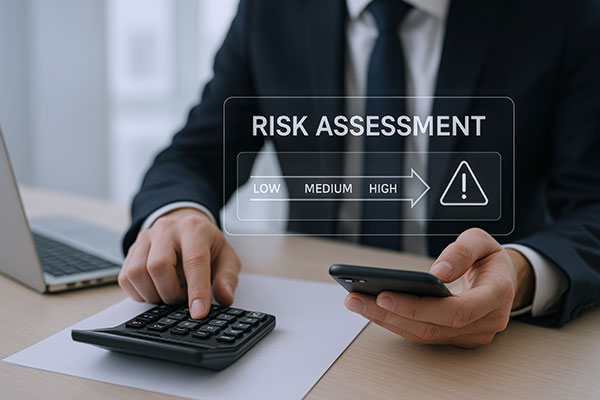
Risk assessment is the process of evaluating potential threats and vulnerabilities to determine the likelihood of adverse events that may occur and cause harm. Financial institutions are acting on public policy decisions, as well as business investments and personal choices, accurately judging risks to guide actions at all levels. However, inherent subjectivity, confirmation biases, and limited mental capacity handicap manual risk assessment processes and propagate their damaging consequences. Artificial intelligence is promising to bring about profound improvements in risk management software, enabling clean decision-making without compromising information security.
The Risk Analytics Software market size is estimated at USD 13 million in 2024 and is projected to reach USD 27 million by 2032, growing at a CAGR of 8.5% from 2025 to 2032, according to research by Future Market Report.
An AI-powered risk assessment solution system is helping various lenders by offering them smarter risk assessment tools. These platforms can dice out the risk management in the present business lending ecosystem. Risk assessment solution systems are providing many loan stats to their borrowers, depending on their creditworthiness, according to their business portfolio. In the present day and age, risk management processes are becoming entirely excellent for banks and NBFCs. These financial institutions are locating ways to mitigate errors, optimise their business portfolios, while also properly supporting their regulatory compliance with ISO 27001, NIST, and other industry standards.
In this article, we will discuss more about how AI-powered risk assessment solutions help in making smarter predictions and faster credit decisions.
AI-based risk assessment software is changing the old credit evaluation with the help of loan data stats and analytics for better research. Both structured and unstructured models are being used to digest data from financial workflow statements, bank statements, transaction records and supply chain information of their customers. An AI introduction is a grain of knowledge for understanding the borrowers’ risk through risk management solutions systems.
Risk assessment platforms are telling the financial institutions their risk scoring so that they can grow beyond the limitations of their static credit models. AI is making stakeholders control their borrowers’ lending behaviour through love alert signal systems. This approach can be helpful in looking out for potential risk anomalies in cash flow, repayment patterns, and sudden liabilities as they happen in real time. Financial institutions are monitoring their risk identification and data security protocols for gaining early sight into the coming stress on their portfolio of products and scenarios.
Equally critical in this risk landscape is the merger of cybersecurity and data security controls within the requirements of a cyberattack. Financial institutions are relying very much on digital data and AI systems so that they can protect their sensitive financial information from better security risks. Global standards such as ISO 27001 and NIST are making sure that compliance management and cyber risks are getting stronger, with a boost in trust among the regulators and customers.
The new AI systems developed for evaluating credit risk have processed both historical and traditional statistics/data from many different markets to help lenders assess their credit risk more clearly and accurately due to the increasing amount and complexity of credit risk portfolios. Because the lenders’ method of assessing borrower risk will be updated constantly as additional information or issues arise, there will be a much better opportunity to make informed decisions based on the accurate and continuous risk assessments on borrowers made by lenders.
By allowing AI technology to take over many of the repetitive administrative responsibilities associated with lending, such as validation of documents through risk-scoring and other forms of risk analysis, lenders now have significantly reduced human error and can quickly reach decisions for credit approvals.
With the introduction of these new AI risk assessment technologies, financial services providers have many options available to them when creating custom dashboards and templates for different sectors and borrowers. The low-cost loans that these AI systems have generated have resulted in tremendous changes to both pricing and performance of portfolios in a short timeframe.
Modern risk assessment systems keep monitoring the risks that are based on cash flows, repayment patterns, and loan portfolio health. These risk assessment solution systems are signing new notification alert teams to financial institutions so that they can improve the process of risk mitigation.
Banks and lenders are pouring money into cybersecurity training, aiming to spot risks early and keep fraudsters out. They’re also working hard to protect all that sensitive financial data. These security systems aren’t operating in a vacuum, either. They’re connecting with loan origination systems, loan management software, and digital lending platforms, so risk assessment runs smoothly from start to finish, across the whole loan process.
Now, when it comes to risk assessment, things are changing fast. Lenders aren’t just relying on the old stuff like financial statements or credit bureau scores anymore. Instead, they’re digging into real-time data, things like how people actually use their accounts, spending patterns, and other signals that paint a fuller picture of someone’s financial health. This shift gives them a much clearer sense of who they’re lending to.
At the same time, there’s a big push for transparency and ethics, especially as AI starts making more decisions about who gets credit. Regulators and stakeholders want to know exactly how these risk models work, not just what comes out at the end. So, financial institutions are building models that don’t just crunch numbers; they also make it easy to explain and audit their decisions. Striking that balance between powerful analytics and clear, honest explanations is starting to define what good risk management looks like today.
The most recent development regarding the risk assessment of a portfolio in relation to the governance frameworks that have led to risk management practices of today is that many financial institutions no longer rely on traditional risk evaluations and compliance management functions. By using these convergence points within their banking platforms, lenders can operate more effectively in lending through these improved methods. The merging of all of these areas has produced a stream of information regarding risks to lenders, which has allowed for an improved flow of the same information into the governance, risk, and compliance frameworks that are currently in use.
The ability to create and deliver automated reports regarding the operations of the financial tools used to maintain such high levels of agility is of utmost importance to the financial institutions that support them. Using predictive analytics to forecast and anticipate future risks is also reinforcing how financial institutions can react to emerging risks with regard to their lending activities. The incorporation of AI predictive models into existing financial institutions provides an opportunity for lenders to assess how changes in macroeconomics and sector trends may affect the future success of their lending portfolios by calculating and analysing the metrics associated with the current established standards. Being able to predict these potential risks provides a means to implement proactive strategies to mitigate risk, optimise pricing, optimise the allocation of capital, and define allowable exposure limits before the associated negative impacts materialise.
Risk assessment solutions systems are carving the landscape of the Indian digital lending market. Indian credit lending is developing at a faster rate, and this has led to the risk management in business lending becoming more critical for upcoming market trends. AI-powered risk assessment solutions are being used by financial institutions to deliver intelligent risk assessment options by optimising operational workflows. This is very useful for earning real-time data insights across various lending products. Lenders are able to easily power up their financial tools to remove human error. Risk assessment solutions are telling the financial institutions their risk scoring so that they can grow beyond the limitations of their static credit models. AI is making stakeholders control their borrowers’ lending behaviour through love alert signal systems. This approach can be helpful in looking out for potential risk anomalies in cash flow, repayment patterns, and sudden liabilities as they happen in real time. Financial institutions are monitoring their risk identification and data security protocols for gaining early sight into the coming stress on their portfolio products and scenarios.
Right now, lenders are pushing limits more than ever before. By 2026, using smart software won’t just help meet rules, it’ll make daily tasks run smoother, too. That shift brings a fresh take on what counts when measuring fair, strong, and money-making loans. Banks and credit firms are grabbing new digital helpers to stay ahead, building up how they handle comprehensive risks. Suddenly, portfolios look better, performance jumps, while customers get noticeably smoother service.
A risk assessment solution in lending is an advanced technology platform developed for lenders to analyze their borrowers’ financial situation and that of the entire portfolio with the help of advanced data analytics algorithms. These algorithms are also used to aid lenders in making better credit decisions around risk management by complying with regulatory standards at each point of contact. The development of user-friendly technology solutions built to the ISO 27001 standard has led to an increased level of investment in creating an effective risk assessment solution for financial institutions.
Artificial Intelligence enables smarter risk assessments by leveraging vast amounts of historical credit risk data from existing users and generating real-time risk assessments for new users. This data allows lenders to better analyze their own financial patterns and identify risk signals associated with changes in the market. Older risk assessment solutions have not provided these types of tools to identify these types of patterns.
Business lending will continue to be increasingly complex in how risk is managed because businesses are currently going through periods of ‘weird’ cash flow and change within their sectors. These new types of risk management tools require both contextual and active assessment of borrowers’ risks. Risk assessment solutions derived from AI, using historic and traditional data from recognised markets to assess and quantify lenders’ credit risk, allow lenders to manage credit risk with the highest level of certainty and efficiency.
Indeed, AI-powered risk assessments are conforming to the established industry standards and regulations. Designed with well-defined Key Performance Indicators and administration controls, these risk assessment algorithms align with the legal regulatory requirements to ensure operational continuity.
Real-time risk assessment solutions are enhancing user loan portfolios because they include software for early detection of stress. Management software provides timely information, preventing any risk from escalating into a significant problem and causing disturbances during these financial procedures. The adoption of AI-based solutions will not only support their regulatory compliance but also sweeten the operational efficiency. It will showcase a redefined approach to the standard metrics for responsible, resilient, and profitable lending tools.


*All fields are mandatory